
About

Lex Sisney, Founder, Organizational Physics
Lex Sisney, the creator of Organizational Physics, is an organizational consultant, executive coach, speaker, and author.

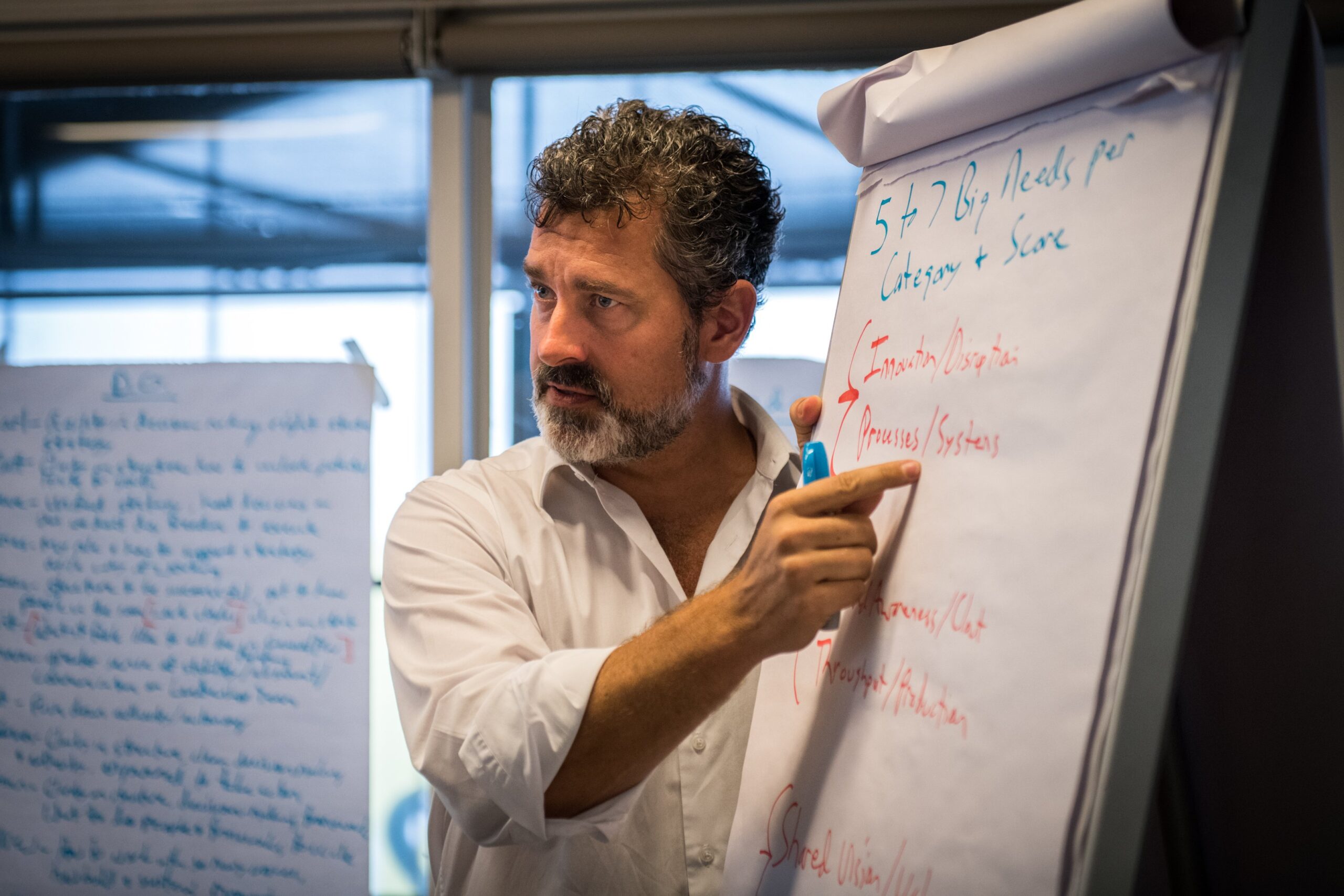
Lex speaking to the Technology Management Program at UCSB

Lex has a long history as a successful entrepreneur, having led two multimillion-dollar high-growth technology companies to market leadership positions. As an executive coach and consultant, he has helped dozens of other companies achieve accelerated business growth, market leadership, and profitable performance.

Lex began his journey as the co-founder, CEO, and Chairman of Commission Junction, the world’s largest affiliate marketing company, which he grew to over 100 employees and 400% annual growth rates, and which now processes billions of transactions and supports hundreds of thousands of online publishers and merchants.

Through his own challenges founding and leading fast-growing companies, Lex began a quest to find a simple, effective paradigm for other founders and CEOs to achieve market-leading, differentiated, and profitable positions for their companies.

Lex has dedicated the past ten years to studying organizational leadership and development. He is certified in multiple next-generation change management modalities and has studied with some of the brightest minds the field of organizational transformation. His influences range from organizational management theorists (Ichak Adizes, Peter Drucker) and high-tech market development strategists (Geoffrey Moore, Steven Blank) to general systems theorists (Ludwig Von Bertanlaffy, Thomas Kuhn) and ground-breaking physicists (Isaac Newton, Edgar Lorenz, David Bohm).

In 2005, Lex published Ready for Enlightenment?, a guide to spiritual development for Type A leaders, which has been endorsed by luminaries like Deepak Chopra, Gay Hendricks, and Barbara Marx Hubbard.

After years of work in this field, Lex discovered that organizational success can be distilled to some simple, yet powerful principles clearly explained by the classic laws of physics – laws that were true 10,000 years ago and will be just as true 10,000 years from now. His unique approach combines a powerful theoretical framework with practical methods to guide organizational leaders toward greater success and work/life satisfaction.

The 6 Laws of Organizational Physics

The intent of Organizational Physics is to use physics as a framework, a way of looking at the underlying behavior of your organization, and to use that knowledge to improve its performance. There are 6 Laws of Organizational Physics that most determine an organization’s performance. The sources of these laws can be found within core branches of physics including systems theory, thermodynamics, chaos, and motion, as well as the most fundamental principle of evolution: adaptation. Think of it this way, if you want your organization to thrive rather than fail, move swiftly in a chosen direction, adapt successfully to change, and behave in a certain way, then the answers all reside within the laws of systems, thermodynamics, chaos, evolution, and motion.

Below is a brief explanation of each law as well as why — as an entrepreneur, manager, or leader — you should be aware of it and understand its implications.

1) An organization is a complex adaptive system
Organizations are complex in that they have many interdependent and interconnected elements, subsystems, or parts. They are adaptive in that they shape and respond to changes in the surrounding environment. They are systems in that they respond as a whole organization, not just a collection of parts. To understand how something really works, it’s not enough to break it down into its components. You must look at it in the context of the complete system. Viewing an organization as a complex adaptive system provides valuable insights into how it functions in its totality.

2) An organization is subject to the first law of thermodynamics
The first law of thermodynamics indicates that, at any given point in time, a system has a finite amount of energy. If an organization is to get new energy, it must get it from its environment. For a business, “energy” is any usable source of power including money, resources, and clout. Its environment includes the surrounding system of customers, social norms, regulations, and economies in which it operates. If there’s high integration between an organization’s capabilities and the opportunities in the environment, then the organization can receive an abundance of new energy. If there’s no integration between these two things, then there’s no new energy created for the organization and — just as a man on a desert island without food and water – it will soon perish.

3) An organization is subject to the second law of thermodynamics
The second law of thermodynamics indicates that everything falls apart over time. This is due to entropy, which is disorder or disintegration in a system. All systems are subject to it; none can escape it. An organization’s available energy first flows to manage and counter the disintegrating force of entropy. If entropy in the system is high, then it costs the system a higher amount of its available energy to maintain itself and get work done. Therefore, it has less energy available to be in integration with its environment. To get an immediate, intuitive grasp of this principle, just imagine a business with a great market opportunity but which also suffers from high internal friction, politicking, and infighting. It takes a tremendous amount of energy to get any work done and the business can’t capture the external opportunity as a result. How an organization manages its available energy is what ultimately determines its failure or success.

4) An organization is subject to some basic recurring patterns
In physics, a chaotic system is one that seems random in its behavior but is actually driven by some basic repeating patterns or forces that exist from the macro- to the micro-level. An organization is a chaotic system. It has patterns or forces that exist all throughout the organization, from the smallest task, to the actions of people and groups, to the largest enterprise. These forces can be mapped in many ways, but one of the most effective I know is in understanding two basic parameters or axes: (1) How the organization both shapes and responds to its environment; and (2) how the organization manages its individual parts and the whole.

These parameters lie behind four primary forces which give rise to individual and collective behavior within an organization. They are the Producing, Stabilizing, Innovating, and Unifying forces. Each of these expresses itself through a particular behavior pattern. If one or more of the forces are absent, the organization will perish. Understanding them allows you to work at the root causes of what’s happening in the system and use them to create desired change.

5) An organization is subject to the conditions in its environment
The driving principle of evolution shows that it is not the strongest or most intelligent that survive but those that are best adapted to their environment. Therefore, the greatest mistake an organization can make is to misread its environment and lose integration. If it does so, it will cease to get new energy and it will fail. Because the environment is always changing, the organization must always be adapting to maintain integration. Successful adaption requires a constant realignment among the organization’s capabilities to execute (Execution Lifecycle), its markets or customers (Market Lifecycle), and its products (Product Lifecycle). How an organization manages this alignment is the basis of its strategy.

6) An organization is subject to the laws of motion
Newton’s three laws of motion reveal the principles of movement for physical objects in the universe. The laws explain inertia, acceleration, and reaction. The laws also help us understand and work with the principles of organizational change and momentum. Namely, they explain why an organization will tend to behave the way it does unless a force of change causes it to do something differently. They explain how the mass of an organization naturally resists change and how every action performed in the business creates an equal and opposite reaction that must be managed. How an organization manages its mass determines the speed of its execution.

So that’s a brief summary of the 6 Laws that govern organizational performance. Don’t worry if they don’t make too much sense yet. They’ll become more clear as you dive into the content and resources on this site. Also, you’ll find that these laws hold true regardless of the time, place, or organizational size or type. They are universal and allow us to infer how any organization really functions, why it’s performing well or poorly, and the sequence of steps to follow to change its behavior and accelerate its performance.

“I wouldn’t give a fig for simplicity this side of complexity but I’d give my right arm for simplicity on the other side of complexity.”
- Oliver Wendell Holmes

Principles

My work is driven by the following three principles:

It starts at the top
I work directly with founders and CEOs who sense a big opportunity in front of them and are determined to capture it. This requires vision, intelligence, and passion. I have witnessed firsthand that inspired business ideas, executed swiftly, always trump a purely analytical, “by the numbers” approach. When the founder/CEO is truly committed, the entire organization responds accordingly. So part of my job is to help leaders clarify their vision, commitments, and priorities.

Partner for success
Great leadership needs great advisors – and that’s where coaching fits in. All of my consulting is based on collaboration and partnership. This is not a traditional consultancy that produces reports and performs implementations independently. I work side by side with you and your team. Because I am an independent advisor, I can provide clarity and a level of perspective that you just can’t get from within the company itself and that helps you uncover the real opportunities.

Don’t fight the physics
If you step on an upturned rake, you’ll get hit in the nose. If you try to go against the laws of Organizational Physics, your business will plummet like a stone. The fact is that there are universal laws at work in your life and business. You need to understand and work with them so that you can resolve the underlying conditions that are causing any breakdowns. And although every business is unique, the principles and patterns are always the same. When you can see them, you’re three steps ahead of those who can’t. I help you to understand the principles and see the patterns to turn breakdowns into breakthroughs.

“Working with Lex is making a HUGE difference in the growth of my business. He has developed powerful frameworks to view the entire business lifecycle that are extremely practical. I am able to move much faster, make decisions quickly and chart both near and long term because of our work. Lex is a great compass and sounding board. Lex’s is an extremely accomplished Entrepreneur and very humble, a combination that I admire immensely. I am grateful for the opportunity to have Lex as a trusted advisor/friend/ mentor and coach.”
- Seth Epstein, Emmy Award Winning Producer

Coaching

One of my core principles is that “it starts at the top.” Organizational Physics coaching programs are for founders and CEOs who desire not only greater business growth and profits, but total work/life satisfaction. Every great athlete and performer has a great coach. Every great entrepreneur and CEO thrives best with the support of a great coach too.

What makes me a great coach? It’s a combination of several things. The first is experience. I have led two companies into hyper growth curves and multi-million dollars in sales. I’ve raised venture capital, built a market-leading company, led management teams, scrambled to make payroll, dealt with board conflicts, and struggled to balance competing demands from work the rest of my life. I’ve been there. I get it firsthand. The second thing is I have trained with some of the leading minds in this and related fields and I’ve developed a deep and powerful framework that I draw upon in our coaching sessions. I know that it works and I know that it will work for you too.

Coaching with me is one of those things that you can only fully appreciate once you try it for yourself. Still, you can expect certain outcomes up front. Following my methods will allow you to do the following:

  • Structure your business as a vehicle for making more money while doing what you love
  • Leverage your “genius zone” and surround yourself with a complementary team
  • Recognize pitfalls and capitalize on new opportunities
  • Understand your team’s dynamics and individual styles
  • Maintain clarity on your vision and priorities
  • Deal with your fears, doubts, and anxieties
  • Learn and practice new concepts that will add momentum to your organization’s growth
  • Get re-engaged with your business
  • Do your best and being accountable for it

Coaching is high-value, high-impact work for entrepreneurs and CEOs who have a big opportunity they want to capture. To determine if my approach is a good fit for you, the fastest course of action is to email Lex and arrange an introductory call.

“Lex Sisney is a master of finding out the vision you really want to bring into the world–and then making sure you do it, even if that means telling you something you don’t want to hear. He brings his vast entrepreneurial experience to bear on every aspect of your business, helping to guide you through the always murky and treacherous waters of starting or growing a company. But Lex has something extra. He tunes into to every word you say–and even the ‘stuff behind the words’–and responds from a place that is at once highly intuitive and entirely brass tacks. I’ve never seen such a powerful integration of business instinct, complex thinking, and spiritual inspiration in anyone, ever. It’s Lex’s rare combination of integrity, experience, and commitment to service that enables him to guide so many entrepreneurs to growth, inside and out.”
- Sam Rosen, CEO, Thought Lead

Workshops

Good strategy is the foundation of any successful business. At the same time, strategy is only as good as the teamwide alignment and commitment to executing it. Since the most brilliant strategy is useless if it can’t be executed, it’s crucial to translate your strategy into a clear, actionable sequence of steps.

Strategic Alignment Workshop
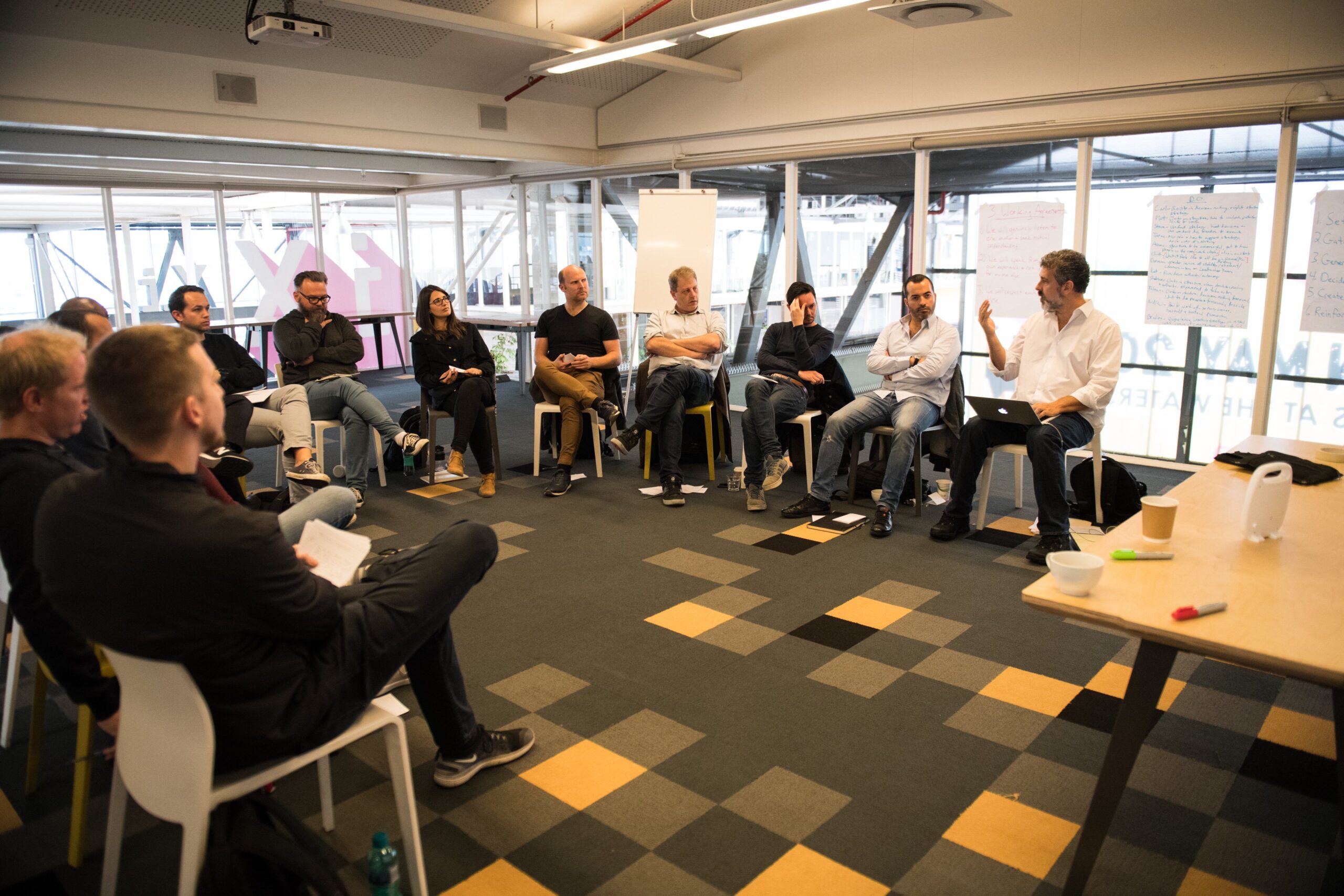
The purpose of my Strategic Alignment Workshop is to create an environment where you can achieve teamwide commitment to the right strategy so that execution becomes swift and decisive. The workshop is conducted over 1.5 days at an off-site location. Participants include all C-level executives as well as all business unit and product line managers.

The outcome of the Strategic Alignment Workshop is organizational clarity on the right strategy, the obstacles to address, an aligned corporate structure, updated key performance indicators, and a realistic teamwide action plan. In addition, you will notice a significant improvement in overall team energy and momentum to execute the chosen strategy.

Agile Development Training and Retrospectives
The purpose of the Agile Development Training and Retrospective Workshop is to help you identify the right product priorities and implement an improved product development process so you can deliver the right product to your customers more swiftly. The workshop is conducted over .5 to 1.5 days at an off-site location. Participants include the business unit leaders, the product manager, and the development team.

The outcome from the Agile Development Training and Retrospective Workshop is increased product clarity, a streamlined development process, and an improvement in overall team energy and momentum. It will help you get the right product into the market with significantly less time and cost.

“I found Lex to be very insightful and effective, particularly in helping to clarify strategy and goals that aligned with our business needs. I would recommend him and welcome the chance to work with him again in the future.”
- Ed Davis, Vice President of Product Development, ESPN

Speaking

Lex has been an invited/keynote speaker in a variety of high-profile venues, including UCSB’s New Venture Forum, SIPA/Silicon Valley Indian Professionals Association Conference, the UCSB Student Affairs Professional Development Conference, and the RINCON Venture Summit. Contact Lex to learn more.

“Lex’s entrepreneurial skills and accomplishments are well known and obvious. So much so that I knew before working with him I was getting an ‘expert’ that had traveled the road I was following on. What I didn’t know was what an amazing communicator, trustworthy, caring and all around great guy he is! He genuinely immersed himself in my issues without any ego or preconceived notions and gave me the most effective advice I’ve had from a mentor… and my previous wall street / trading mentor was no slouch! Lex helped me focus my attention both in my business and my personal life and I can say the effects have been dramatic. If you work with Lex you are going to get an honest, creative, highly intelligent and curious person who will deliver results.”
- James Crane-Baker, CEO, Rede Parede