Summary Insight:
You can’t solve a problem from within its own quadrant. Real change comes from working the adjacent quadrants.
Key Takeaways:
- Corporate team building fails because it tries to fix a Unifying problem by doing more Unifying activities.
- To improve any part of a system, you have to step outside the system you’re trying to improve.
- The highest-leverage solutions to teamwork problems live in Strategy, Structure, and Process—not in bonding exercises.
- When you redesign the environment, behavior follows automatically.
- Build the system right, and high-performers reinforce the culture for you.
Have you ever sat through a corporate team building event?
There’s an entire industry dedicated to it. Trust falls, ropes courses, psychometric assessments, communications training. You know the drill.
Go offsite. Bond. Return transformed.
About a third of the group is resentful to be there. A third is genuinely glad for the time together. And the other third is watching, waiting to see which way the wind blows.
Whatever lift (if any) you got from those experiences—I’d bet it didn’t last. The same friction points came back. The same frustrations. The same interpersonal tensions.
Here’s why.
You can’t solve a problem from its own quadrant.
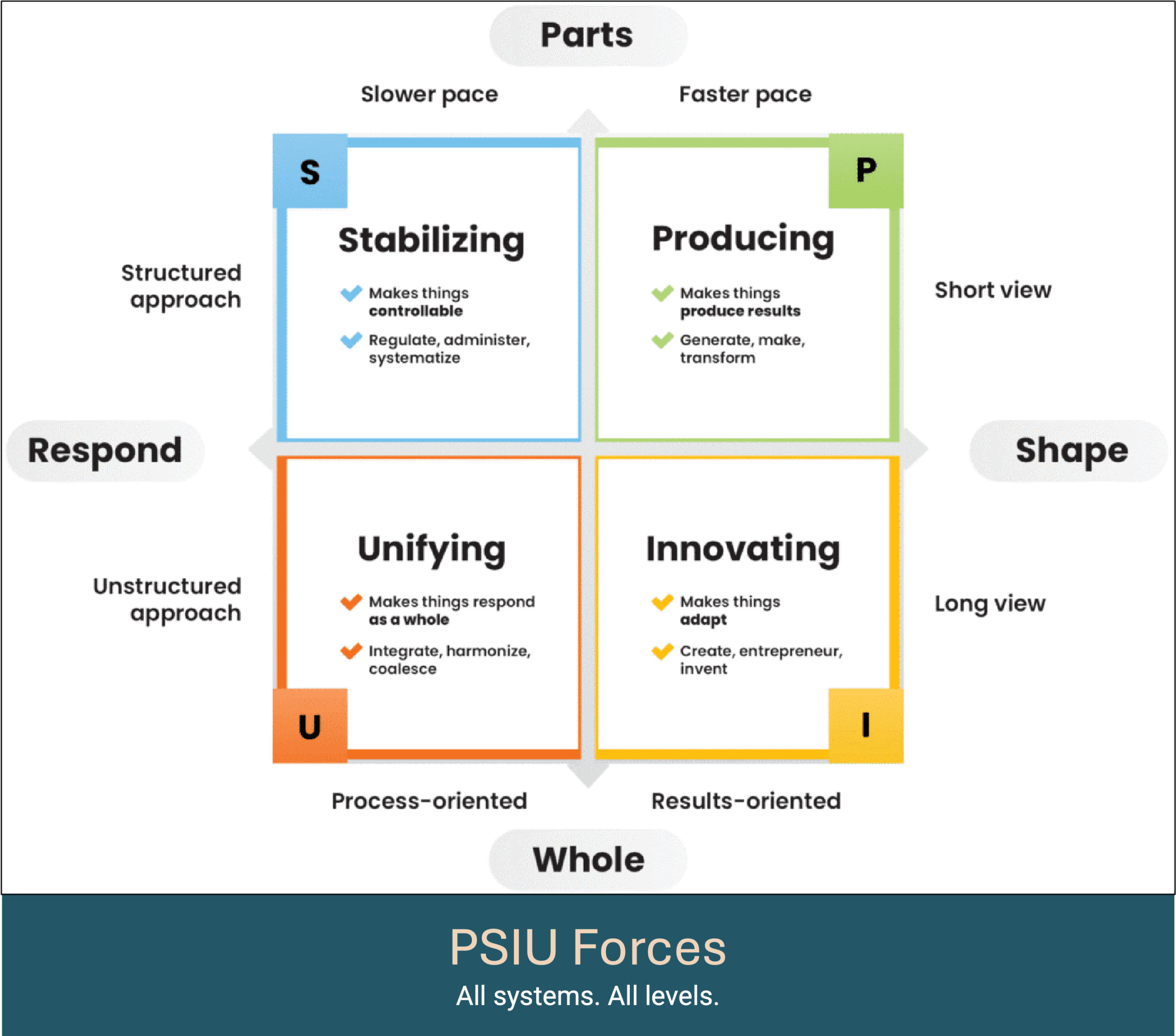
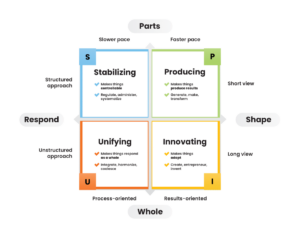
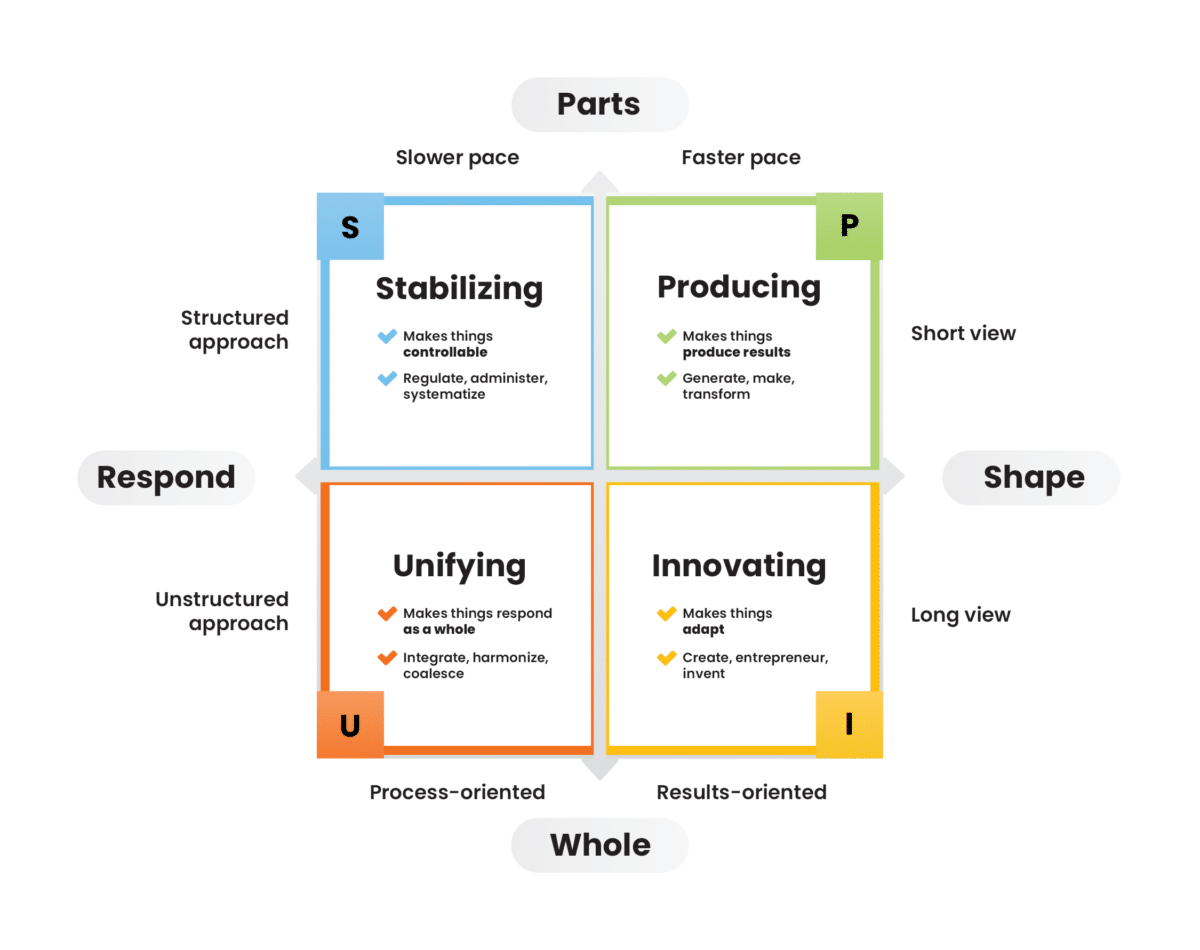
These four quadrants—Producing, Stabilizing, Innovating, Unifying—represent the observable activity of any system, from an individual to a team to a company.
Each quadrant competes for finite energy. More energy burned in one means less available in the others.
Team building is a Unifying activity. So when you try to fix teamwork by doing more team bonding—you’re working inside the same quadrant. You’re not changing the system. You’re just engaged in activities that lack the leverage to be effective.
To improve any part of a system, you have to step outside it.
So what actually works?
Start in the Innovating quadrant. These activities make the business effective over the long-term. Do you have a clear, actionable strategy—one that builds unique and valuable capabilities through a sequence of focused goals? If the team doesn’t know where they’re going and why it matters, no amount of bonding will fix that.
Then move to Stabilizing. These investments make the business efficient in the short-term. There are two complementary, but distinct elements of this quadrant.
- First, Structure. This is the design of the organization: roles, accountabilities, reporting lines. It should exist independent of the people currently filling it. If your structure only works because of who’s in the seats right now, you don’t have a structure—you have a dependency.
- Then Process. This is how energy moves through the structure. How decisions get made. How work gets done. How you improve throughput over time. Good process is what turns a well-designed org into an adaptive organism.
Then look at the Producing quadrant. This is where people enter. The right people energize the roles in the structure and bring the processes to life. They don’t just show up—they improve what they touch. The question is whether your people are a net positive or a net drain on the system.
But before you blame the people, ask yourself, “Hey, if I had to show up in a system every day where the strategy, roles, and ways of working weren’t clear or are filled with friction, how engaged would I be?”
Then—and only then—circle back to Unifying. But notice: you’re now working at the level of vision, values, and culture. Not interpersonal dynamics. You’re one level up from where the observable problems live. You’re shaping the canal that allows the water to flow, not trying to hoist one bucket at a time.
Here’s what happens when you do this right.
You’ve redesigned the environment. You’ve created a self-reinforcing feedback loop—strategic focus, role clarity, streamlined decision-making and workflows, and that gives you the visibility and clarity to ensure you have the right people energizing the right work.
High-performers in the right setting become additive. And they won’t tolerate low-performers—they don’t have to. In a transparent organization, one with clear goals, accountabilities, and expectations, there’s nowhere to hide. Low-performers either rise to the role or get replaced. The design mentality surfaces the truth.
No trust fall required.
Summary
Stop trying to solve team problems by doing more team activities. That’s working inside the problem, not on it.
Build the strategy. Design the structure. Build the processes that make it run. Then put the right people in focused roles to bring it all to life. The culture emerges from what you’ve built—not from what you’ve bonded over.
The highest-leverage move is almost never where the pain is visible.
📌 P.S. Want the tools to do this right? Whether you’re diagnosing strategic friction, clarifying structure, or assessing PSIU styles across your team—work with me to take your business to the next level: Apply for CEO Coaching.